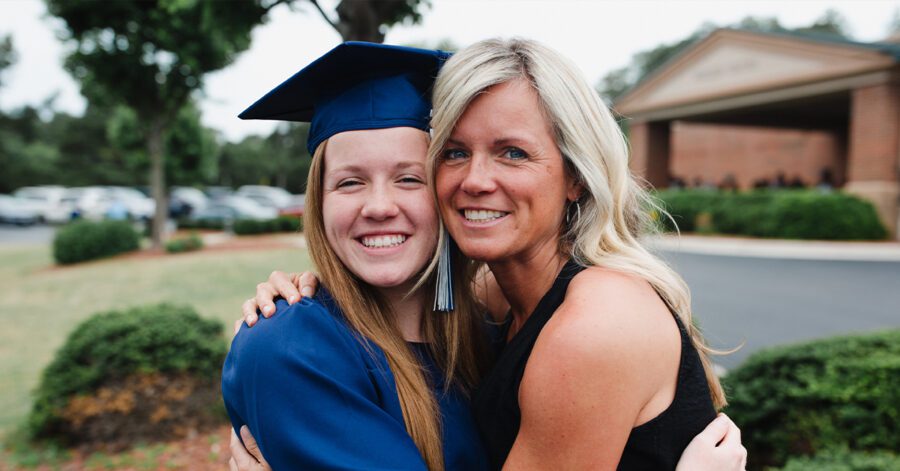
A homeschool graduation ceremony starts with the intention that began when your child took their first steps. It is a milestone that brings memories and hope together in a beautiful bouquet of learning and love, but families finishing the Challenge program often carry practical questions into this season: what the ceremony should include, how formal it needs to be, and whether a homeschool diploma actually carries weight with colleges and employers.
Leigh Bortins addresses this season directly in Chapter Twelve and the epilogue of The Conversation, reassuring parents that graduation, like every other stretch of the high school years, is simply one more thing to learn and do well as a family. Classical Conversations families have celebrated this milestone for decades, in living rooms, rented halls, and even at sea, and this guide gathers what actually works.
Planning the Ceremony: Practical Ideas for a Meaningful Celebration
A homeschool graduation ceremony does not need a stadium, a marching band, or a guest list a mile long to mark the moment well. What it needs is intention: a clear sense of what the day is for and who belongs in the room. Most families build the ceremony around three simple elements: a diploma presentation, a short reflection on the student’s learning journey, and time with the people who shaped it, parents, Tutors, Directors, and community day friends who sat beside the graduate through years of memory work, essays, and debate.
What to Include in the Ceremony
- Diploma presentation, signed by the parent as the primary educator
- An optional speech or letter from the graduate reflecting on the journey
- Scripture reading or prayer that anchors the day in gratitude
- Recognition of the Tutors, Directors, and mentors who invested in the student
- A shared meal or reception with family and community day friends
Some families keep the ceremony small and personal, held at home or folded into their local Challenge community’s final gathering of the academic year. Others prefer something larger. Classical Conversations hosts a National Commencement, complete with regalia and a full ceremony, for families who want their graduate’s milestone marked on a bigger scale with their larger CC community.
CC Members can order their Official Graduation Package, including diploma, through our partner: HomeschoolDiploma.com
Reflecting on the Journey: What the Classical Model Built Over the Years
Graduation is also a good time to look backward. Long before the ceremony, the classical model was already at work in three movements, corresponding to the three trivium arts.
The Trivium Arts, Built Over Time
In Foundations, the grammar gave the student a body of knowledge, memory work in history, science, and Latin, recited together with the whole family. In Essentials and the early Challenge levels, dialectic taught the student to ask good questions and sort through that knowledge.
By Challenge II, III, and IV, rhetoric brought it all together, and the graduate learned to write papers, debate positions, and speak persuasively about what he or she had come to believe was true. From age 4 to commencement, students practiced the liberal arts of grammar, dialectic, and rhetoric as they grew toward wisdom and freedom.
Leadership and Lifelong Friendships along the Way
Along the way, most graduates also picked up something the transcript will not show directly: leadership. Challenge students lead strands, mentor younger classmates, and practice public speaking in Policy Debate and Lincoln-Douglas Debate long before they wear a cap and gown. They also build friendships that don’t fade after the graduation ceremony, the kind formed by years of singing songs, wrestling over deep topics, and debating tough issues together.
Looking Ahead: Encouragement for the Next Chapter
A graduate’s next step might be college, a trade, military service, or full-time work, and the fifteen skills built through Foundations, Essentials, and Challenge travel with the student into all of them.
Trusting God with What Comes Next
Parents finish this season with a kind of graduation of their own. After years of managing memory work in Foundations and mentoring in Challenge, parents know more than they realize: how to ask good questions, weigh options, and seek wisdom in community with other Classical Conversations families. That confidence carries directly into helping a graduate choose a college, a program, or a first job. Listen to Graduating Into a New Beginning, the Everyday Educator episode on Chapter Twelve of The Conversation, for encouragement in this exact season.
Resources for the Road Ahead
Families looking forward to what comes after high school can start with a few more resources: Why Homeschool through High School, The Classical Model: Preparing Students and Parents for Post-Graduation Endeavors, and a Homeschool Transcript Guide for documenting the years of work behind the diploma.
Frequently Asked Questions about Homeschool Graduation
What should a homeschool graduation ceremony include?
Most ceremonies include a diploma presentation, a brief reflection on the student’s learning journey, and time with family, Tutors, Directors, and community day friends. Some families keep it simple; others plan a formal event, such as the National Commencement of Classical Conversations.
How do homeschool families plan and celebrate graduation?
Planning usually starts with deciding on scale: a small home ceremony, a shared event with the local Challenge community, or a larger formal gathering. From there, most families choose a date, invite the Tutors and Directors who mentored the student, and decide whether to include a reflection speech, a diploma presentation, and a reception.
Does a homeschool diploma carry the same weight as a public school diploma?
A parent-issued homeschool diploma is legally valid nationwide and is generally accepted by colleges, the military, and employers. Recognition can still vary somewhat by state, so families should check local requirements, but the transcript, not the diploma itself, typically carries the most weight with admissions offices. It is worth keeping a well-documented transcript alongside the diploma for this reason.
Celebrating Your Homeschool Graduation Well
A homeschool graduation ceremony marks the close of a season that began with those first small steps and grew, year by year, into memory work, essays, debates, and late nights at the kitchen table. Plan the day with intention, and let it be a chance to look back with gratitude at the knowledge, understanding, and wisdom God has grown in your student over the years. The ceremony will end, but what it celebrates, a mind and a heart shaped to know and glorify Him, carries on into whatever comes next.
Button[Join National Commencement]
Want to Learn More About Preparing Your Student for After Graduation? Check Out These Resources
- CLEP Tests for Homeschoolers: How to Earn College Credit Before You Graduate
- How Classical Education Already Helps Your Teen with CLT, ACT, and SAT Prep
- Beyond Graduation: Why Community Service for Teens Matters for a Christian Life
- How to Prepare for the CC Senior Thesis: A Parent’s Guide (Everyday Educator podcast)